

Birds
Birds seen on, above or adjacent to Naphill Common (information supplied by Gavin Glenn and Gordon Hickmott). To listen to bird songs click *Bretts Westwood's Guide to Birdsong on Radio 4. Updates, additions and comments are welcome. Contact us
B C D F G H J K L M N O P R S T W Y
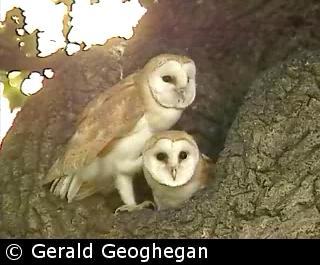
Barn Owl - Not sure whether they have been seen in or around the village but I have seen them feeding just beyond Princes Risborough, Barn Owls are incredible birds. Struggling with the lack of suitable nest sites they are entirely dependent on voles and small mice for their survival. (Gavin Glen)
|
Blackbird - Present in huge numbers throughout the village, the Blackbird seems to thrive in any habitat. (Gavin Glen). Seen every day (Gordon Hickmott) 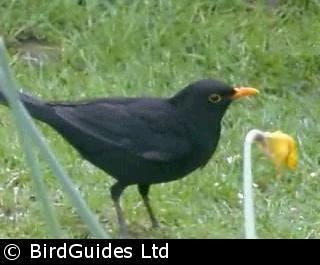 To listen to birdsong* click here
|
Blackcap - Fairly common throughout the year, often seen on garden feeding stations in winter. (Gavin Glen). Seen Sept 2012 (Gordon Hickmott) 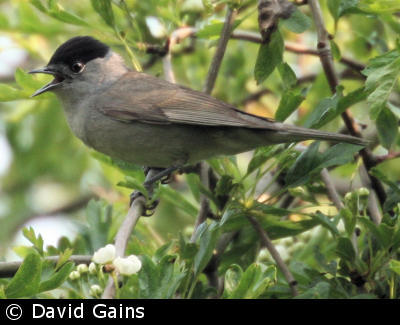 To listen to birdsong* click here
|
Black Headed Gull - Seen March 2013 (Gordon Hickmott)
|
Blue Tit - Very common throughout the year. Flocks of well over 100 birds seen together in the woods and along the forest edge during winter. Frequent visitor to gardens and nestboxes. (Gavin Glen). Seen every day (Gordon Hickmott) 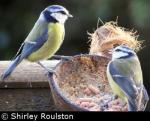 To listen to birdsong* click here
|
Brambling - Seen Feb 2012 (Gordon Hickmott)
|
Bullfinch - Frequent visitor to gardens especially in winter. Will feed voraciously on fruit trees in late winter/early spring stripping young buds. Quite timid when flying away can be identified by bright white patch on its back. Unmistakeable bird, a real stunner. (Gavin Glen). Seen Sept 2012 (Gordon Hickmott) 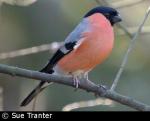 To listen to birdsong* click here
|
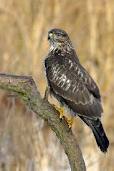
Buzzard - A stockier bird than our common Red Kite the Buzzard often gives it's presence away with an eerie shriek. About the same wing span as a kite with mottled plumage, rounded wings and a rounded tail. Always a couple of pairs on the common, sometimes seen being mobbed by Red kites. (Gavin Glen). Seen every day (Gordon Hickmott)
|
Carrion Crow - The Carrion Crow (left), Jackdaw (mid) and Rook (right) are very common birds and is found in large flocks often on fields in and around the common. Unlike the Rook the Crow has a black beak and deep black plumage. Jackdaws are seen throughout the village in gardens and by the roadside, smaller than their cousins they appear to have patches of blue/grey on their bodies and normally nest in holes in trees. Rooks are distinguishable by their crusty white beaks and are found in large flocks which nest communally. Increasingly Ravens are seen in flocks of Crows and can easily be identified by their size. (Gavin Glen). Seen every day (Gordon Hickmott) 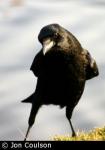 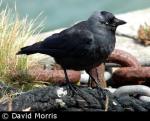 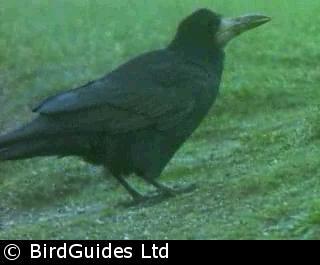 To listen to birdsong* click here
|
Chaffinch - The Chaffinch is a very frequent visitor to our gardens throughout the year. Flocks of well over 100 birds can be seen in the forest during winter months. (Gavin Glen). Seen Feb 2013 (Gordon Hickmott) 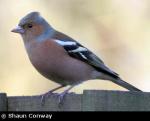 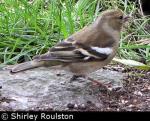 To listen to birdsong* click here
|
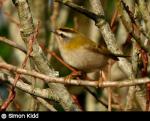
Chiffchaff - The Chiffchaff is not a finch but a warbler and is often heard throughout the spring months throughout the forest. Will occasionally visit gardens but mostly seen high in large bushes. Resident birds are joined by large numbers of migrants in April/May. (Gavin Glen). Seen Aug 2012 (Gordon Hickmott) 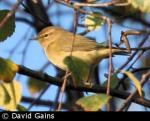 To listen to birdsong* click here
|
Coal Tit - Another frequent visitor to our gardens in Naphill/Walters Ash, the Coal Tit is often seen amongst flocks of Great and Blue Tits. Easily distinguishable by a white stripe running from the top of its head to its upper back. (Gavin Glen). Seen every day (Gordon Hickmott) 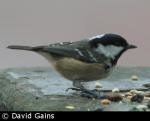 To listen to birdsong* click here
|
Collared Dove - As can be seen from this picture collared doves are very comfortable at garden feeding station. Sometimes though because maybe of their size they do attract the attention of cats. More often than not it is Collared Doves that can be heard cooing on summer days. Birds can become very tame and will tolerate humans in very close contact. (Gavin Glen). Seen every day (Gordon Hickmott) 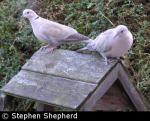 To listen to birdsong* click here
|
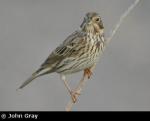
Corn Bunting - Corn Buntings are frequently sighted on telephone/electricity cables, fences, gateposts along the edge of fields. Not really woodland birds they are usually sighted either singly or in pairs and will become more evident as summer develops. (Gavin Glen). Seen Sept 2012 (Gordon Hickmott)
|
Crow - The all-black carrion crow is one of the cleverest, most adaptable of our birds. It is often quite fearless, although it can be wary of man. They are fairly solitary, usually found alone or in pairs. The closely related hooded crow has recently been split as a separate species. Carrion crows will come to gardens for food and although often cautious initially, they soon learn when it is safe, and will return repeatedly to take advantage of whatever is on offer.
|
Cuckoo - Not a fantastic pic but Cuckoos were very evident during May and June last year. Heard calling throughout the common, several birds may well have passed through. Victims of hunting in the Meditteranean on their journey to and from Africa each year, Cuckoo numbers have dwindled at a considerable rate and they are now one of a number of bird species threatened with extinction in the UK. (Gavin Glen) 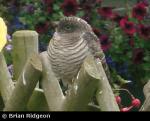 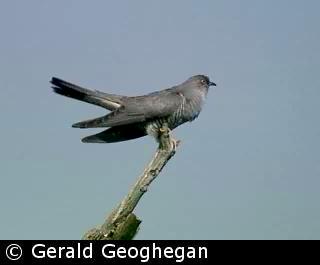 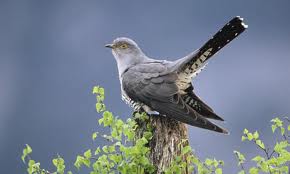 |
Dove - See |
Dunnock - The Dunnock or Hedge Sparrow (yes I know it's not really a sparrow!!) is probably found in every garden in the village. Resident throughout the year they will be amongst the first birds to visit your feeding station and can become extremely tolerant of humans. Regularly nest in our gardens but usually fall victim to cats or squirrels. (Gavin Glen). Seen every day (Gordon Hickmott) 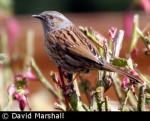 To listen to birdsong* click here
|
Fieldfare - Like the Redwing, the Fieldfare arrives every winter in huge numbers and can be seen in fields and in large flocks in larger trees. Quite a large bird it is easily distinguished by its grey 'hood' and very bright Thrush like plumage. (Gavin Glen). Seen March 2013 (Gordon Hickmott) 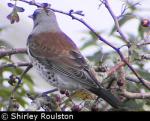 To listen to birdsong* click here
|
Firecrest - The Firecrest is a tiny bird and occasionally individual specimens can be seen amongst flocks of Goldcrests. The birds are often heard peeping midway in trees and Firecrest are distinguished by a larger and more vivid 'flash' on their foreheads and a white stripe through their eyes. (Gavin Glen)
|
Garden Warbler - Seen July 2010 (Gordon Hickmott)
|
Goldcrest - The Goldcrest is a tiny bird similar to a Goldcrest. The birds are often heard peeping midway in trees and Firecrest are distinguished by a larger and more vivid 'flash' on their foreheads and a white stripe through their eyes. (Gavin Glen). Seen August 2012 (Gordon Hickmott) 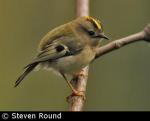 To listen to birdsong* click here
|
Goldfinch - A very common easily distinguishable bird, the Goldfinch is a frequent garden visitor and can be seen throughout the year. Often seen feeding on Teazel heads and Thistles in groups of about half a dozen. (Gavin Glen). Seen Feb 2013 (Gordon Hickmott) 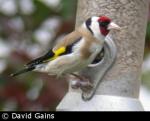 To listen to birdsong* click here
|
Great Spotted Woodpecker - Greater Spotted Woodpeckers are heard from about February drumming. Sporadic drumming does take place throughout the year but things really peak when spring has broken and birds use their beaks to call for mates and establish territory. GSWs will visit garden feeding stations and are more easily spotted in the woods during the winter. (Gavin Glen). Seen every day (Gordon Hickmott) 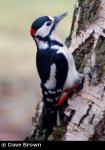 To listen to birdsong* click here
|
Great Tit - Unmistakeable the Great Tit is much 'cleaner' than the blue tit with vivid green back, bright yellow chest and a clear black stripe running from its chin through its breast. Extremely common in gardens and woodland. (Gavin Glen. Seen every day (Gordon Hickmott) 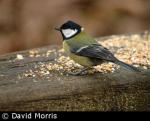 To listen to birdsong* click here
|
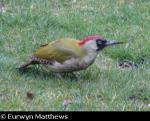
Green Woodpecker - Green Woodpeckers are seen in trees but more often than not this is exactly where you will see them. They feed predominantly on ants and will often become so preoccupied with an ants nest that humans can approach to within a few feet. The call of a Green Woodpecker is known as a 'Yaffle' and sounds I think almost like a woman screaming with laughter. (Gavin Glen). Seen April 2013 (Gordon Hickmott)
|
Greenfinch - Greenfinch numbers have dwindled recently due it is believed, to an aggressive virus. This year though numbers do seem to be very healthy. A frequent visitor to garden feeders, Greenfinches are residents and can be seen throughout the year. (Gavin Glen). Seen Feb 2013 (Gordon Hickmott) 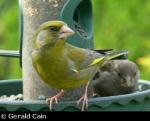 To listen to birdsong* click here
|
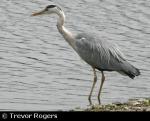
Grey Heron - Often seen in flight over the village, the Grey heron feeds mainly on pond/river life but can be found early in the day on sports pitches looking for earthworms. Unmistakeable huge bird with long slender neck and long legs stretched out behind it in flight. (Gavin Glen). Seen Oct 2009 (Gordon Hickmott)
|
Grey Wagtail - Occasionally seen at the ponds in the forest the stunning Grey Wagtail is a summer visitor that will breed if conditions are suitable. So named because it has a grey upper body and wags its tail incessantly. (Gavin Glen) 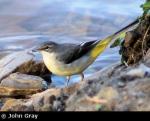 To listen to birdsong* click here
|
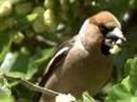
Hawfinch - The Hawfinch is a large, heavily built finch with a large head, "bull-neck" and a huge, powerful, conical shaped bill.The back is a rusty-brown, the breast and belly are buff and the head is orange-brown with a black bib and grey neck. The tail is short with a broad white terminal band. The bill is grey-blue in summer, yellow in winter and the legs are flesh-brown. Not a common bird but recent sightings in Walters Ash suggest that there may be one or two residents on the common. (Gavin Glen). Seen Sept 2012 (Gordon Hickmott)
|
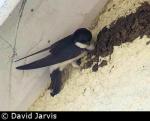
House Martin - Another summer visitor the first House Martins usually arrive in the village during April/May. Distinguishable from Swallows due to lack of red throats and a slightly stockier bird. House Martins a reliant on eaves for nesting opportunities and are finding it increasingly challenging due to the plastics that are now used in so many builds. (Gavin Glen). Seen Sept 2012 (Gordon Hickmott)
|
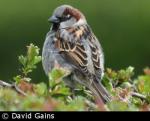
House Sparrow - Another once common bird that is struggling in part due to modern building materials, the House Sparrow is rarely seen in some parts of the UK. Moderate numbers seem to be resident in parts of the village. (Gavin Glen). Seen March 2013 (Gordon Hickmott)
|
Jackdaw (mid), Carrion Crow (left), & Rook (right) are very common birds and is found in large flocks often on fields in and around the common. Unlike the Rook the Crow has a black beak and deep black plumage. Jackdaws are seen throughout the village in gardens and by the roadside, smaller than their cousins they appear to have patches of blue/grey on their bodies and normally nest in holes in trees. Rooks are distinguishable by their crusty white beaks and are found in large flocks which nest communally. Increasingly Ravens are seen in flocks of Crows and can easily be identified by their size. (Gavin Glen). Seen every day (Gordon Hickmott) To listen to birdsong* click here
|
Jay - A stunning bird, the Jay is a close relative of the crow and can be found throughout the forest. An occasional visitor to garden feed stations Jays will store food during the summer for use in the winter. Studies on individual Jays have found that some have kept dozens of separate food stores spread over a wide area. (Gavin Glen). Seen April 2013 (Gordon Hickmott) 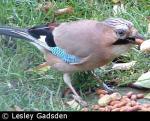 To listen to birdsong* click here
|
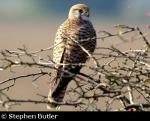
Kestrel - Kestrels are small birds of prey that are often seen hovering over hedge rows and fields. They feed mainly on mice and voles but will take dragonflies or small birds. Sometimes seen over the allotments and fields adjacent to the forest. (Gavin Glen)
|
Lapwing - The Lapwing, Green Plover or Peewit can be found in quite large numbers in the fields adjacent to the woodland during winter. Small numbers do breed on the land used for pheasant rearing. Easily distinguishable and flocking in groups of several thousand elsewhere in the country. (Gavin Glen) 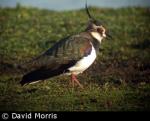 To listen to birdsong* click here
|
Lesser Black Back Gull - Seen Sept 2010 (Gordon Hickmott)
|
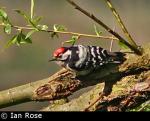
Lesser Spotted Woodpecker - A rarely seen resident of the forest the Lesser Spotted Woodpecker is about the size of a sparrow. Only chance of spotting one is during a very slow, patient, winter walk and often quite high in the trees. Birds are resident in the forest the whole year round. (Gavin Glen). Seen April 2012 (Gordon Hickmott)
|
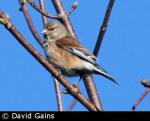
Linnet - Resident throughout the year Linnets are fairly drab brownish birds but on closer inspection they do have a pinkish bib under their beak. Similar from a distance to a female Chaffinch. (Gavin Glen)
|
Little Egret - Seen August 2021 (Chris Miller) at Daisy Pond
|
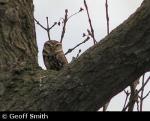
Little Owl - Resident throughout the year Little Owls are just that. Very small creatures the give away their presence with a slight scream. Often seen feeding during the daytime especially in Spring the birds will tolerate some human presence. (Gavin Glen). Seen July 2011 (Gordon Hickmott)
|
Long-tailed Tit - Groups of up to twenty Long tailed Tits will visit gardens and entertain with the acrobatics hanging upside down and scrambling through trees and bushes hunting for insects. Unmistakeable pinkish birds with not surprisingly given their name, a long tail. (Gavin Glen) Seen March 2013 (Gordon Hickmott) 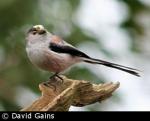 To listen to birdsong* click here
|
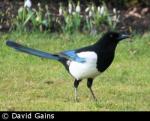
Magpie - Magpies are well established throughout the village. Nesting in ball like structures high in trees, Magpies are real scavengers and will often be the first to investigate any potential food source. (Gavin Glen). Seen every day (Gordon Hickmott)
|
Mallard - Seen April 2013 (Gordon Hickmott)
|
Marsh Tit - Seen Marsh 2013 (Gordon Hickmott)
|
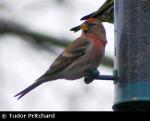
Redpoll - Frequent visitors to garden feed stations Redpolls and Mealy Redpolls have a brightish pink chest and will often be seen in fairly large communal groups comprising maybe 20 or so birds. (Gavin Glen)
|
Mistle Thrush - Named due in part to its association with Mistletoe, the Mistle Thrush rarely visits gardens unlike the smaller Song Thrush. Often seen in pairs flying from treetop to treetop, the Mistle Thrush is really a bird of the woodland. (Gavin Glen). Seen Feb 2013 (Gordon Hickmott) 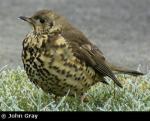 To listen to birdsong* click here
|
Nuthatch - A stunning bird found throughout the woods and a frequent visitor to garden feeding stations, the Nuthatch is as at home winkling grubs from treebark as it is plundering a nut feeder. Often heard calling especially during spring, Nuthatches are usually found fairly high up on the top branches of trees and will work their way around the branch. Blue backed with a pink/peach body, can't really be mistaken for anything else. (Gavin Glen). Seen every day (Gordon Hickmott) 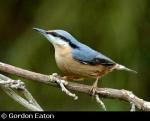 To listen to birdsong* click here
|
|
|
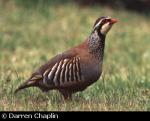
Partridge, Red Legged - Red legged or French Partridge are found in fields surrounding the shoot. Introduced exclusively to be shot, some Partridge have made their way into the village a pair were nesting in the Walters Ash allotments last year. (Gavin Glen). Seen Feb 2013 (Gordon Hickmott)
|
Pheasant - Seen April 2013 (Gordon Hickmott)
|
Pied Flycatcher - Seen June 2005 (Gordon Hickmott)
|
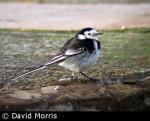
Pied Wagtail - Common in gardens and resident at the Crick, the Pied Wagtail is well established throughout the village. (Gavin Glen). Seen Feb 2013 (Gordon Hickmott)
|
Perigrine Falcon - Seen Oct 2012 (Gordon Hickmott)
|
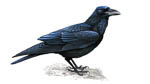
Raven - The raven is a big black bird, a member of the crow family. It is massive - the biggest member of the crow family. It is all black with a large bill, and long wings. In flight, it shows a diamond-shaped tail. (Gavin Glen). Seen Feb 2013 (Gordon Hickmott)
|
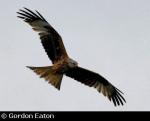
Red Kite - Red Kites are now common in the area. One of their major threats though are people who think they are doing them a favour by leaving scraps of food for them to eat. Processed meat is bad enough for humans to eat but it is deadly for these birds. If you want to feed the kites - and who wouldn't, please gather up road kill and place this out for them. Rabbits, squirrels and birds recently killed will contain the fluids, vitamins and calcium that the kites need in addition to the obvious protein. Please also put out water for them as Kites are very vulnerable indeed to dehydration. (Gavin Glen). Seen every day (Gordon Hickmott)
|
Red Legged Partridge - Red legged or French Partridge are found in fields surrounding the shoot. Introduced exclusively to be shot, some Partridge have made their way into the village a pair were nesting in the Walters Ash allotments last year. (Gavin Glen). Seen Feb 2013 (Gordon Hickmott)
|
Redpoll - Frequent visitors to garden feed stations Redpolls and Mealy Redpolls have a brightish pink chest and will often be seen in fairly large communal groups comprising maybe 20 or so birds. (Gavin Glen)
|
Redwing - Arriving at about the same time as the winter flocks of Fieldfares, the much smaller Redwings can often be found amongst the Fieldfare flocks. As can be seen in the picture they have a bright red flash under their wings which becomes very obvious in flight. (Gavin Glen). Seen Feb 2013 (Gordon Hickmott) 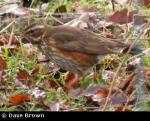 To listen to birdsong* click here
|
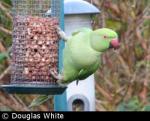
Ring Necked Parakeet - Not sure whether they've been seen in the village but they are becoming increasingly common in Marlow/Bourne End, Ring Necked Parakeets are an example of how a well intentioned act can have devastating effects on a local eco system. Tens of thousands of Parakeets are now resident throughout South London and have devastated the local bird population. (Gavin Glen). Seen Aug 2011 (Gordon Hickmott)
|
Robin - Robins are amongst the first birds to start singing again in the early New Year. Aggressively territorial they will occasionally fight to the death for the right to take control of a garden/female. (Gavin Glen). Seen every day (Gordon Hickmott) 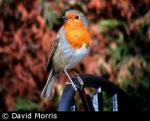 To listen to birdsong* click here
|
Rook (right), Carrion Crow (left) & Jackdaw (mid) are very common birds and is found in large flocks often on fields in and around the common. Unlike the Rook the Crow has a black beak and deep black plumage. Jackdaws are seen throughout the village in gardens and by the roadside, smaller than their cousins they appear to have patches of blue/grey on their bodies and normally nest in holes in trees. Rooks are distinguishable by their crusty white beaks and are found in large flocks which nest communally. Increasingly Ravens are seen in flocks of Crows and can easily be identified by their size. (Gavin Glen). Seen Nov 2012 (Gordon Hickmott) To listen to birdsong* click here
|
Siskin - A stunning bird mainly of the woodland but an occasional garden visitor, the Siskin can be mistaken for a female Greenfinch. (Gavin Glen). Seen Oct 2011 (Gordon Hickmott) 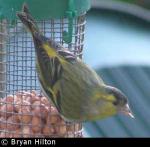 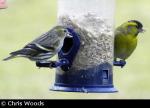
To listen to birdsong* click here |
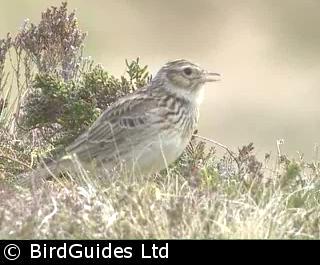
Skylark - Thankfully still present in numbers, Skylarks can be heard singing all year round but the singing peaks in the Spring and Summer. Most fields surrounding the village seem to have breeding birds. (Gavin Glen)
|
Snipe - Seen Feb 2013 (Gordon Hickmott)
|
Song Thrush - Fairly common in woodland and an occasional visitor to our gardens the Song Thrush can often be found pulling up earthworms or smashing snail shells in quite an aggressive way. (Gavin Glen). Seen April 2013 (Gordon Hickmott) 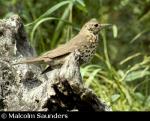 To listen to birdsong click here
|
Sparrowhawk - Sparrowhawks have become grateful for the abundance of bird feeders in our gardens. An outbreak of shrieks from Blackbirds will often be the only warning before a blue tit disappears in a cloud of feathers. I have seen them feeding and gardens in Walters Ash, on telegraph poles in Naphill and in the field at Walters Ash and Naphill school. (Gavin Glen). Seen April 2013 (Gordon Hickmott) 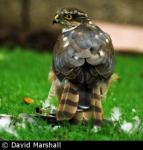 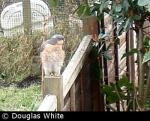 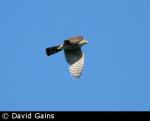 To listen to birdsong* click here
|
Spotted Flycatcher - Seen Sept 2012 (Gordon Hickmott)
|
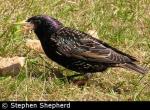
Starling - Another common bird but not that common in the village is the Starling. Roosts in other parts of the country in numbers exceeding 10,000 but have only seen small groups spread throughout the village. (Gavin Glen). Seen Oct 2012 (Gordon Hickmott)
|
Stock Dove - Stock doves are similar in plumage and size to rock doves/feral pigeons. They are largely blue-grey with an attractive iridescent bottle green band on the back of the neck. In flight they show black edges to the wing and two partial black bands near their back. Unlike rock doves/feral pigeons they do not have pale rumps.
|
Swallow - The Swallow and the Swift are summer visitors to the village and both, like the House Martins nest mainly in eaves. Swifts are mainly brown birds with scythe like wings and can be seen flying much higher than the swallows and martins late into the evening on summers days. (Gavin Glen). Seen August 2012 (Gordon Hickmott) 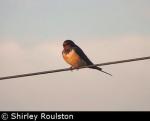 To listen to birdsong* click here
|
Swift - The Swallow and the Swift are summer visitors to the village and both, like the House Martins nest mainly in eaves. Swifts are mainly brown birds with scythe like wings and can be seen flying much higher than the swallows and martins late into the evening on summers days. (Gavin Glen). Seen July 2011 (Gordon Hickmott) 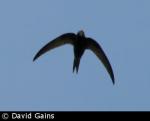 To listen to birdsong* click here
|
Tawny Owl - Tawny Owls are very common in our woods. They are the ones that call with the characteristic 'To whit to woo' that we will hear throughout the year, but more commonly from mid February throughout the summer. They will be seen during the day from February until May gathering food for their young. (Gavin Glen). Seen April 2013 (Gordon Hickmott) 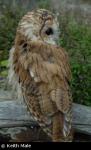 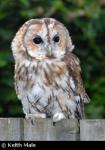 To listen to birdsong* click here
|
Tit - see
|
Tree Creeper - Looks a bit like a mouse when feeding, the Treecreeper occupies the same environment at the Nuthatch. Works its way round branches of trees but clearly distinguishable from other species. Its call will often give it away. (Gavin Glen). Seen April 2013 (Gordon Hickmott) 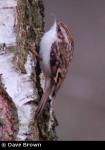 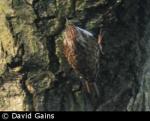 To listen to birdsong* click here
|
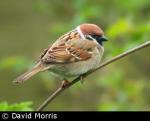
Tree Sparrow - Binoculars at the ready for this one. Tree Sparrows are not particularly common but are regularly seen in the woods often amongst mixed flocks of finches. (Gavin Glen). Seen April 2005 (Gordon Hickmott)
|
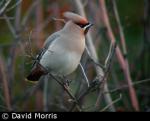
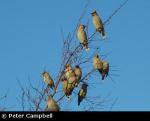
Waxwing - Waxwings were here in large numbers in the winter of 2010. Each year thousands ofbirds leave Scandinavia for the UK and whilst they are regularly spotted 'up North' it is rare for large numbers to make it this far south. Stunningly beautiful Waxwings are not unlike Starlings in flight but once settled they cannot be mistaken. Will feed voraciously on Cotoneaster berries. (Gavin Glen)
|
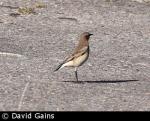
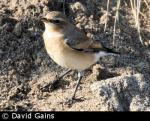
Wheatear - Always worth a second look during March/April at any thrush sized pale looking bird on grazed meadow/sportsfields. Wheatears arrive in Spring and often settle for a few weeks to feed before moving onto the high moors where they will breed. Grey backed with a pale yellowish breast. (Gavin Glen)
|
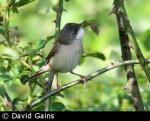
Whitethroat - Another bird of the summer the Whitethroat is fairly easy to identify because it is helpfully, a mainly brown smallish bird with a white throat. (Gavin Glen)
|
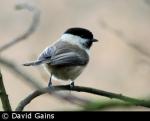
Willow Tit - An occasional visitor to the garden feeder but more at home in the woods is the Willow Tit. Fairly dull compared to the flocks of Blue and Great Tits that it will often be found amongst. Present in fair numbers throughout the woodland. (Gavin Glen)
|
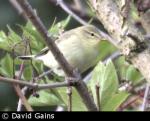
Willow Warbler - The more likely garden visitor of the warbler family, the willow warbler is a stunning small green bird with a vibrant song. (Gavin Glen)
|
Woodcock - Woodcock can sometimes be seen dashing at about shoulder level through the trees, in my experience at dawn or dusk. The males give themselves away readily in Spring when displaying in an attempt to woo females. Small snipe like birds they are unfortunately also likely to be found hanging alongside the pheasants and partridge following a day's shooting on the common. (Gavin Glen). Seen April 2013 (Gordon Hickmott)
|
Woodpecker - see
|
Woodpigeon - Woodpigeons are everywhere!!! (Gavin Glen). Seen every day (Gordon Hickmott) 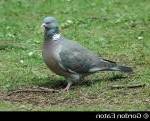 To listen to birdsong* click here
|
Wren - Cracking little birds, Wrens are very common throughout the village. During the winter they will often congregate in very large numbers in bird boxes to keep warm. (Gavin Glen). Seen every day (Gordon Hickmott) 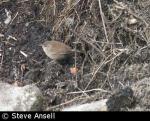 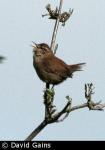 To listen to birdsong* click here
|
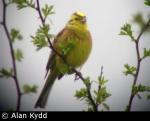
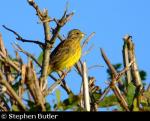
Yellowhammer - Seen in greater numbers in the summer the Yellowhammer is a stunning bird about the size of a Chaffinch that can often be seen on wires, fencing or on the top of a bush singing its heart out. Look for it in hedgerows and at the edge of the woods. (Gavin Glen)
|

If you can help in any way please contact Peter Davis.